Home insurance premiums have skyrocketed 146% since 2017, rising from $1,200 to nearly $2,950 annually, according to industry analysis of rising insurance costs and housing affordability trends. Home insurance costs and homeowners insurance rates have surged far beyond inflation since 2021, driven by devastating hurricane seasons and weather events that forced insurers to dramatically raise home insurance premiums across the national average. Meanwhile, most buyers focus exclusively on mortgage rates and miss this catastrophic cost driver entirely.
In the next 10 minutes, you’ll discover the hidden affordability crisis eating your home budget, and why your real estate agent needs to address it before you make an offer.
The $800/Month Problem Nobody’s Talking About

You could be pre-approved for a $400,000 home based on your mortgage capacity. The lender says you’re good. Your agent shows you listings. Everything feels manageable until closing day arrives.
That’s when reality hits: your monthly housing payment is $800 higher than expected once insurance, taxes, and HOA fees are included. The cost of home insurance alone can add hundreds to your payment, especially if the insurer requires property insurance coverage for the replacement cost of your home based on 2024 construction prices, building materials, and labor costs. The rising cost of building materials and labor costs over the past three years has forced home insurance companies to increase rate increases dramatically. According to the National Association of Insurance Commissioners and Federal Insurance Office, the average cost that homeowners pay has seen the price of insurance and rates to rise at unprecedented levels, making expensive home insurance the new normal. The increase in premium costs affects home and auto bundling strategies as well. Suddenly, that “affordable” home isn’t affordable at all.
This isn’t hypothetical. It’s happening to buyers right now in markets across America. The higher cost of insurance policies and insurance costs rising faster than wages means average homeowners insurance premiums are crushing affordability calculations. According to the Insurance Information Institute, home insurance rates and the average annual premium for insurance coverage have reached record levels due to material costs and catastrophic losses.
Why This Matters More Than Your Mortgage Rate
Here’s the uncomfortable truth: most real estate agents calculate affordability using only one number, the mortgage payment. They look at what the lender approves and assume that’s the safety threshold.
But housing costs have three pillars:
- Mortgage payment (principal + interest)
- Property taxes and HOA fees
- Homeowners insurance (the silent killer)
For decades, insurance was relatively stable. A modest cost everyone factored in. Not anymore.
Understanding the Homeowners Insurance Market Collapse
Many homeowners are discovering that their homeowners insurance policies no longer reflect the reality of today’s homeowners insurance market. A new report shows that insurance premiums are rising faster than home values, creating a crisis where homeowners policies can’t keep pace with the actual cost to rebuild a home. The combination of home repairs using expensive materials and home improvements that increase reconstruction costs means many homeowners are underinsured without realizing it.
What Happened: The Insurance Collapse
Natural disasters have become dramatically more expensive and frequent. The first nine months of 2025 alone saw $105 billion in global insured losses from natural catastrophes, the sixth consecutive calendar year exceeding $100 billion, reflecting the severity of climate-related impacts on the insurance market, according to Aon’s analysis of global catastrophe losses.
Insurance companies did what insurance companies do: they raised premiums. Insurance claims from natural disasters forced insurers to raise rates and recalculate risk, and homeowners insurance costs surged nationwide. The insurance crisis is driving up home insurance costs at annual average rates that continue to increase across the U.S. State insurance departments and insurance agents alike are warning homeowners about the need for adequate flood insurance and coverage from their department of insurance-approved carriers.
In California, monthly housing payments for mid-tier homes exceeded $5,500 in September 2025, a 74% increase since January 2020, according to California Legislative Analyst’s Office housing affordability analysis. Insurance costs represent a significant portion of that jump. In multifamily housing, the situation is even worse. Between 2020 and 2023, multifamily insurance rates increased by an average of 12.5% annually, with some affordable housing providers experiencing insurance premium increases exceeding 400% over six years, according to industry analysis of rising insurance costs and their impact on housing affordability.
Translation: the insurance market is broken, and your agent’s pre-approval conversation isn’t broken by accident. It’s broken by omission.
The Real Affordability Crisis: Your Agent Missed Step One

Here’s how this typically plays out:
What your lender does: Include an estimated insurance amount in your pre-approval, typically based on outdated historical averages. Many lenders use estimates that haven’t reflected reality since 2022, based on industry trends in mortgage underwriting practices.
What your agent should do: Pull actual insurance quotes for specific properties before you make an offer. This requires coordination with insurance brokers and risk assessment, based on industry best practices for comprehensive affordability analysis.
What actually happens: Based on industry trends, many agents skip this step entirely. They focus on mortgage approval and price negotiation. Insurance gets addressed at closing, by which point you’re already committed emotionally and financially to the purchase.
The result: Surprise. Sticker shock. Buyer’s remorse.
This isn’t incompetence. It’s a structural problem in how real estate agents are trained and compensated. They make commission on the sale price, not on whether the total housing cost is truly affordable. Your financial reality after closing is outside their performance metrics.
Location, Location, Insurance: The Data Real Agents Should Share
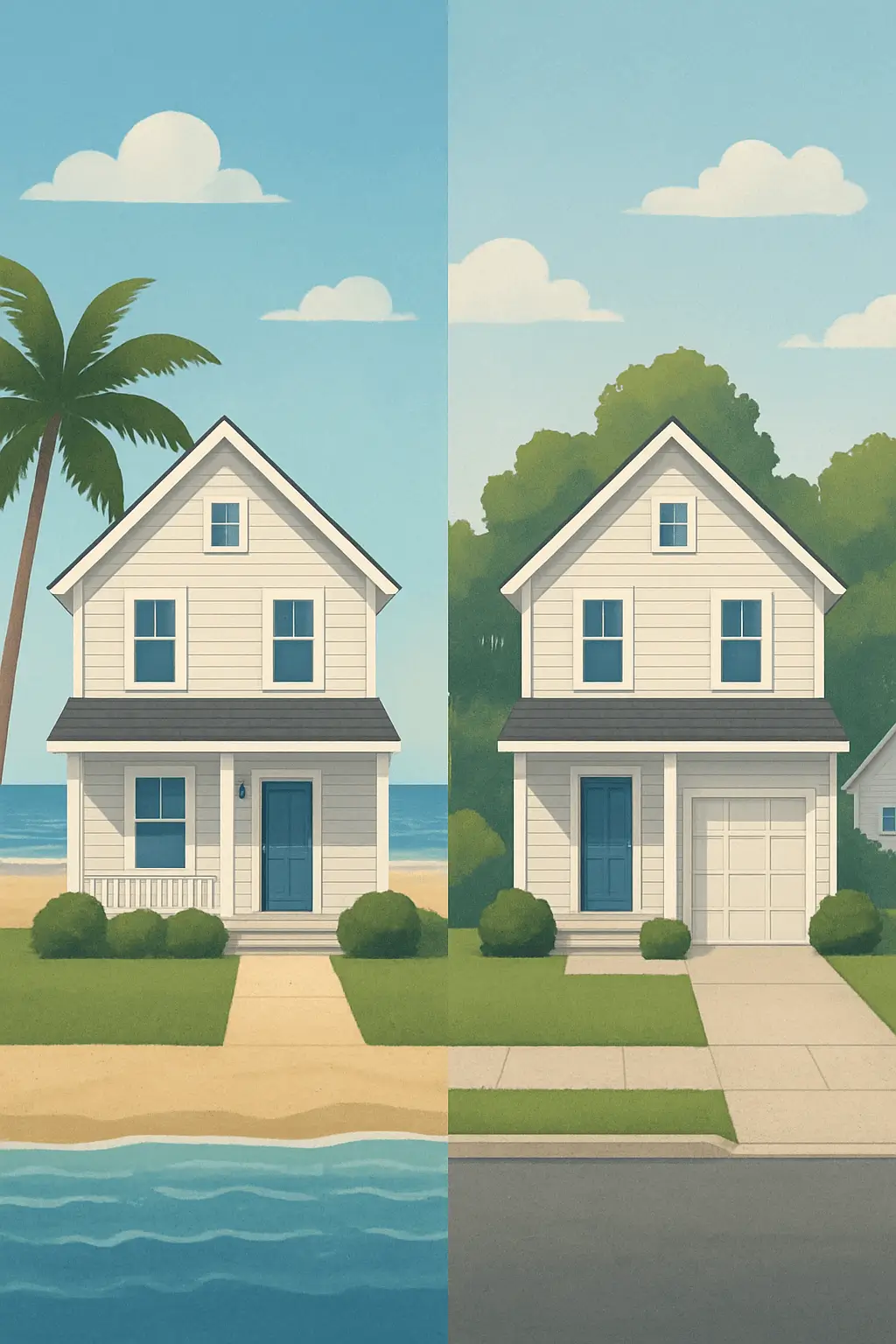
Insurance costs vary dramatically by location. Two identical homes, one in a coastal flood zone and one in a suburban inland area, can have insurance premiums differing by $3,000-$5,000 annually.
Here’s what sophisticated agents now do, based on industry best practices:
-
Risk assessment before showing: They review flood maps, wildfire risk zones, and historical claim data for each neighborhood.
-
Insurance quote requests: They coordinate with local insurance brokers to get actual quotes for specific properties before presenting them to buyers.
-
Total housing cost analysis: They calculate not just mortgage + taxes, but mortgage + taxes + insurance + HOA fees. This is the actual monthly housing payment.
-
Alternative comparisons: They might show you a slightly less desirable property in a lower-risk zone that results in $200-$300 monthly insurance savings, which compounds to $24,000-$36,000 over a 10-year mortgage.
Most agents do none of this. They present listings and assume the lender’s approval is sufficient validation of affordability.
Why Your Lender’s Numbers Are Meaningless
Mortgage lenders use standardized insurance estimates in their approval calculations. These estimates haven’t been updated to reflect 2025 market reality. According to data from real estate industry sources, the disconnect between estimated and actual insurance costs is now one of the leading causes of financing surprises at closing.
A buyer pre-approved for $400,000 might be approved based on:
- $3,000/month mortgage payment
- $600/month property tax estimate
- $1,200/year insurance ($100/month estimate)
Total pre-approval threshold: $3,700/month
But when actual insurance quotes come back at $400-$500/month instead of $100/month, the real housing cost becomes $4,100/month, 400+ dollars over the comfortable threshold.
At that point, you’re either backing out (and losing earnest money), renegotiating (which sellers often refuse), or overcommitting financially (which creates years of budget stress).
What Smart Homebuyers Are Doing Now
Informed buyers are flipping the script. They’re:
-
Getting insurance quotes first: Before even house hunting, they contact insurance brokers with their target zip codes and property types. Real quotes for real locations.
-
Including insurance in their affordability calculation: Their true maximum home price is based on total monthly housing cost, not just mortgage approval amount.
-
Asking agents the hard questions: “What’s the typical insurance premium in this neighborhood?” “Can you get me three actual quotes before I make an offer?” “How does this property’s insurance cost compare to the listing next door?”
-
Demanding transparency: They’re requesting that agents present the full financial picture, not just mortgage capacity, but total housing cost reality.
The Bottom Line: Insurance Is Now a Deal-Killer
For the past 20 years, insurance was background noise in home purchase decisions. You focused on mortgage rate, down payment, and price negotiation. Insurance was a given.
That era is over.
Today, insurance premiums rival property taxes in many markets. They exceed the entire mortgage payment in high-risk areas. They’re the reason seemingly “affordable” homes remain unaffordable for middle-income buyers.
Your real estate agent should be addressing this in the first conversation, not at closing day. If they’re not, they’re not actually helping you make an affordable decision. They’re helping you make a sale.
Before your next house hunt, ask yourself: Does my agent understand the full cost of homeownership? Or are they only counting the mortgage?
The difference between those two approaches could be tens of thousands of dollars.
Sources: