How to Flip Houses
The complete guide to profitable house flipping in any market
Last Updated: February 2026
House flipping (also called house-flipping or fix and flip) involves purchasing undervalued properties, renovating them strategically, and selling for profit. Successful flippers routinely earn $30,000-$100,000+ per project, with some generating well over six figures on larger deals. But flipping isn't without risk—poor analysis, renovation mishaps, or real estate market shifts can turn potential profits into devastating losses, and you can lose money if you're not careful.
This comprehensive guide teaches you everything you need to know about how to flip a house: finding the right property, analyzing profits, financing flips, managing renovations, and selling for maximum returns. Learn how to flip houses with no money using creative financing, and discover ways to flip houses successfully. Whether you're flipping your first house or refining your approach, this guide provides the strategies successful flippers use every day in the flipping process.

Part of the Real Estate Investing Guide Series
What Is House Flipping?
House flipping is an active real estate investment strategy where you purchase properties below market value, renovate them to increase value, and sell quickly for profit. Unlike buy-and-hold investing, flipping focuses on creating immediate equity rather than long-term cash flow.
The Basic Flip Formula
Profit = Sale Price - (Purchase Price + Renovation Costs + Holding Costs + Selling Costs)
Example flip breakdown:
- Purchase price: $150,000
- Renovation costs: $45,000
- Holding costs (3 months): $6,000
- Selling costs (agent fees, closing): $18,000
- Total investment: $219,000
- Sale price: $275,000
- Gross profit: $56,000
Types of Flips
Cosmetic flips: Properties needing mostly surface-level updates—paint, flooring, fixtures, landscaping. Lower risk, lower profit potential, faster turnaround.
Renovation flips: Major renovations including kitchen/bath remodels, layout changes, or system updates. Higher potential returns but more risk and capital required.
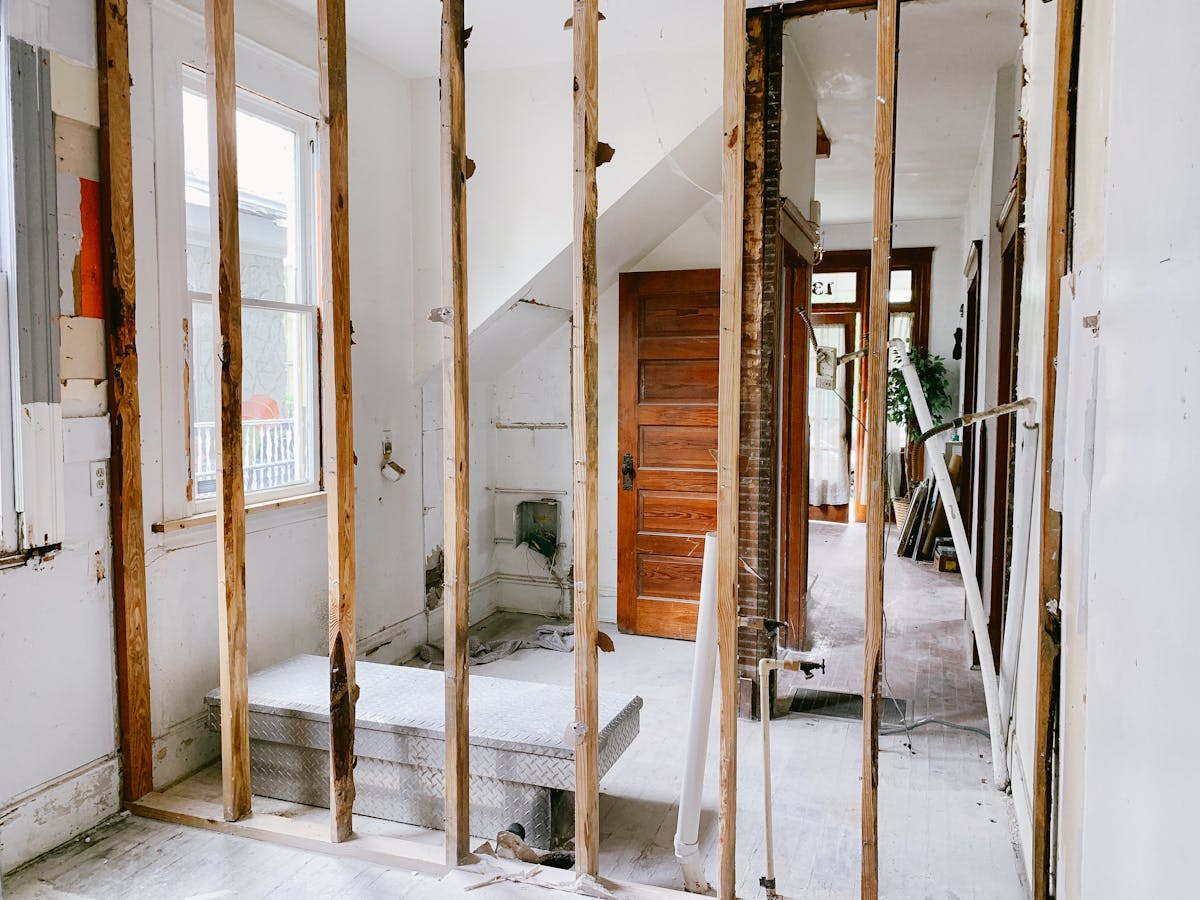
Gut rehabs: Complete teardowns to studs. Highest profit potential but requires significant experience, capital, and risk tolerance.
Wholesale flips: Technically not flipping—you assign contracts to other investors without ever purchasing or renovating. Lower profit per deal but minimal capital required.
The 70% Rule: Calculating Maximum Purchase Price
Successful flippers use the 70% rule as a fundamental guideline:
Maximum Purchase Price = (ARV × 70%) - Repair Costs
Where ARV (After Repair Value) is the projected sale price after renovations.
Why 70%?
The 30% margin accounts for:
- Holding costs (mortgage, taxes, insurance, utilities)
- Selling costs (agent commissions, closing costs)
- Profit margin (your compensation for risk and effort)
- Contingency for unexpected costs
70% Rule Example
Finding your maximum purchase price:
- ARV (based on comparable sales): $350,000
- 70% of ARV: $245,000
- Estimated repairs: $55,000
- Maximum purchase price: $190,000
When to Adjust the 70% Rule
Use 65% in: Expensive markets, longer renovation timelines, uncertain markets, or your first few flips.
Use 75% when: You have contractor discounts, very fast turnarounds, or hot seller's markets where properties move quickly.
Finding Houses to Flip
The profit in a flip is made at purchase. Finding undervalued properties is the most critical skill.
On-Market Sources
MLS (through an agent): Fixer-uppers, estate sales, and overpriced listings that eventually reduce. Work with an investor-friendly agent who understands your criteria.
Foreclosures and REOs: Bank-owned properties often sell below market value. Learn the full process in our guide on how to buy a foreclosed home. Sources include:
- HUD Homes (hudhomestore.gov)
- Fannie Mae HomePath
- Bank foreclosure listings
- Sheriff's sales
Auctions: Courthouse steps and online auction platforms (Auction.com, Hubzu). Require cash or proof of funds, limited inspection access, and quick closing.
Off-Market Sources (Where the Best Deals Are)
Direct mail: Send letters or postcards to motivated seller categories:
- Absentee owners (landlords living out of state)
- Inherited properties (probate and estate lists)
- High-equity homeowners (owned 15+ years)
- Pre-foreclosure lists
- Tax-delinquent properties
- Code violation lists
Driving for dollars: Drive neighborhoods looking for distressed properties—overgrown lawns, peeling paint, boarded windows, accumulated mail. Research owners and contact directly.
Wholesalers: Investors who find deals and assign contracts. Build relationships with local wholesalers; they bring you deals, you close them.
Networking: Real estate investor meetups, local REI clubs, BiggerPockets forums. Deals come from relationships.
Online marketing: Google Ads, Facebook ads, motivated seller websites. Requires budget and marketing knowledge.
Evaluating Potential Flips
For each potential property, quickly assess:
- Location: Is the neighborhood desirable? School ratings? Crime?
- ARV potential: What are comparable properties selling for?
- Renovation scope: Cosmetic or structural? Can you handle it?
- Quick math: Does it pass the 70% rule?
- Market conditions: How fast are homes selling in this area?
Financing House Flips
Unlike rental properties, flips require short-term financing designed for quick turnarounds:
Cash (Best Option)
Paying cash provides significant advantages:
- Fastest closes (can close in days)
- Strongest offers (sellers prefer cash buyers)
- No interest payments eating into profits
- Maximum flexibility
If you don't have cash, consider partnering with someone who does.
Hard Money Loans
Asset-based loans from private lenders, designed for flips:
- Loan amounts: 65-75% of ARV or 80-90% of purchase + rehab
- Interest rates: 8-15%+
- Points: 1-3 points (% of loan amount) upfront
- Terms: 6-18 months
- Approval: Days, not weeks
- Based on: Property value and deal quality, not primarily your credit
Hard money is expensive but enables flipping without massive capital.
Private Money (Private Money Lenders)
Loans from individuals—family, friends, or private money lenders—offer another way to flip houses without using your own money:
- Negotiate your own terms with private money lenders
- Often more flexible than hard money for flipping homes
- May accept lower returns than hard money lenders
- Relationship-based lending—key for flipping a home
Home Equity (HELOC or Cash-Out Refi)
Use equity in your primary residence or other properties:
- Lower interest rates than hard money
- Flexible draw schedule
- Risk: Your home is collateral
Business Lines of Credit
Unsecured lines from banks based on business credit:
- Rates vary widely
- Revolving—use and repay repeatedly
- Requires established business credit
Typical Deal Structure Example
- Purchase price: $150,000
- Renovation budget: $50,000
- Total project cost: $200,000
- Hard money at 85% of costs: $170,000 loan
- Your cash required: $30,000 + closing costs
Estimating Renovation Costs
Accurate repair estimates make or break flips. Underestimating costs is the #1 cause of failed flips.
Getting Accurate Estimates
- Walk the property thoroughly: Inspect every room, system, and exterior
- Create a detailed scope of work: List every repair needed
- Get multiple contractor bids: At least 2-3 for major work
- Add contingency: Always add 15-20% for unexpected issues
Typical Renovation Cost Ranges
These are rough estimates—actual costs vary by market and scope:
| Renovation Item | Low Range | High Range |
|---|---|---|
| Interior paint (per sq ft) | $1.50 | $3.50 |
| Flooring (per sq ft) | $3 | $12 |
| Kitchen remodel (budget) | $10,000 | $25,000 |
| Kitchen remodel (mid-range) | $25,000 | $50,000 |
| Bathroom remodel (budget) | $5,000 | $10,000 |
| Bathroom remodel (mid-range) | $10,000 | $25,000 |
| Roof replacement | $8,000 | $20,000+ |
| HVAC replacement | $6,000 | $15,000 |
| Water heater | $1,000 | $3,000 |
| Electrical panel upgrade | $2,000 | $5,000 |
| Landscaping (basic) | $1,000 | $5,000 |
| Exterior paint | $3,000 | $8,000 |
High-ROI Renovations for Flips
Focus renovation dollars where they provide the highest return:
Highest ROI improvements:
- Curb appeal: First impressions matter most (landscaping, exterior paint, new entry door)
- Kitchen updates: New counters, cabinets, appliances, backsplash
- Bathroom remodels: Buyers scrutinize bathrooms heavily
- Fresh paint: Neutral colors throughout (gray, greige, white)
- New flooring: LVP (luxury vinyl plank) offers best value
- Updated lighting: Modern fixtures transform spaces cheaply
Avoid over-improving: Don't add features that exceed neighborhood standards. The most expensive house on the block is hardest to sell.
Managing the Renovation Process
Renovation management determines whether you hit your timeline and budget or blow both.
Finding Reliable Contractors
Sources for contractors:
- Referrals from other investors (best source)
- Referrals from real estate agents
- Home Depot/Lowe's referral programs
- Online reviews (with caution)
- Contractor matching services
Vetting contractors:
- Check license and insurance (verify, don't trust)
- Request and call references
- Visit current job sites if possible
- Start with a small project before large ones
- Get detailed written bids, not ballpark estimates
Creating a Scope of Work
A detailed scope of work prevents disputes and keeps projects on track:
- List every task with specific materials and finishes
- Include allowances for selections (fixtures, appliances)
- Specify quality standards expected
- Define timeline with milestones
- Outline payment schedule tied to completion milestones
Renovation Timeline Management
Time is money—every extra week costs holding costs:
- Create a realistic project schedule
- Order materials before work begins
- Coordinate trades to minimize gaps
- Visit the property regularly (at least every other day)
- Address issues immediately, not later
- Have backup contractors for critical trades
Payment Best Practices
- Never pay more than 10% upfront (for materials)
- Tie payments to completed milestones
- Hold final payment until 100% complete
- Get lien waivers with each payment
- Pay with checks or digital payments (paper trail)
Contractor Red Flags
- Demanding large upfront payments
- No written contract or detailed scope
- Can't provide references or license
- Significantly lower bids than competitors
- Pressure to start immediately
- Poor communication or missed appointments
Selling Your Flip: How to Sell the House
Even a perfectly renovated flip fails if it doesn't sell the house quickly at the right price. The best way to flip houses is to plan your exit from day one. Learn how to flip houses successfully by mastering both renovation and sales.
Preparing for Sale
Final punch list: Walk the property as a buyer would. Fix every detail—buyers notice small imperfections.
Deep cleaning: Professional cleaning inside and out. Windows, appliances, grout, everything spotless.
Staging: Staged homes sell faster and for more. Options:
- Full professional staging ($2,000-$5,000+)
- Virtual staging for photos ($100-$300)
- Minimal staging (key pieces only)
Professional photography: Non-negotiable. Photos determine whether buyers schedule showings. Budget $200-$500 for professional shots.
Pricing Strategy
Price aggressively: In flipping, you want to sell quickly. Consider pricing 3-5% below comparable listings to generate multiple offers and a quick sale.
Analyze competition: What's currently on the market? How does your property compare? Price based on current listings, not closed sales from months ago.
Consider market conditions: In hot markets, price at comparables. In slow markets, price below to attract buyers.
Working with a Listing Agent
A skilled listing agent maximizes your sale price and speed:
- Accurate pricing based on current market
- Professional marketing and MLS exposure
- Showing coordination
- Negotiation expertise
- Contract to closing management
Look for agents experienced with investor properties who understand your need for speed and efficiency.
Calculating Selling Costs
Factor these into your profit calculations:
- Agent commissions: 5-6% of sale price (negotiable)
- Seller closing costs: 1-3% (title, recording, transfer taxes)
- Buyer credits: Often expected in buyer's markets
- Staging and photography: $500-$5,000
- Holding costs until close: 30-45 days after accepted offer
Tax Implications of Flipping
Understanding taxes prevents unpleasant surprises:
Ordinary Income vs. Capital Gains
House flipping profits are taxed as ordinary income, not capital gains.
Because flipping is an active business, the IRS treats profits as ordinary income subject to:
- Federal income tax at your marginal rate (10-37%)
- Self-employment tax (15.3%)
- State income tax (varies)
On a $50,000 flip profit, you might owe $15,000-$25,000+ in taxes depending on your bracket.
Reducing Tax Liability
Track all expenses: Deduct every legitimate business expense—materials, contractor payments, interest, utilities, travel, tools, marketing.
Business structure: Operating through an S-Corp can reduce self-employment tax on profits above your reasonable salary.
Retirement contributions: SEP-IRA or Solo 401(k) allows significant pre-tax contributions from flip profits.
Hold longer: Properties held over 12 months qualify for long-term capital gains rates—but this changes your strategy from flipping to value-add rentals.
Consult a CPA: Work with an accountant experienced in real estate to minimize taxes legally.
House Flipping Risks and How to Mitigate Them
Every flip carries risk. Understanding and preparing for risks protects your investment:
Financial Risks
Underestimating renovation costs:
- Mitigation: Add 15-20% contingency, get multiple bids, inspect thoroughly before purchase
Overestimating ARV:
- Mitigation: Use conservative comparables, account for market changes, get agent input
Holding too long:
- Mitigation: Build realistic timelines, price to sell quickly, have backup exit strategies (rent if needed)
Market downturn:
- Mitigation: Buy with sufficient margin, have cash reserves, consider rentability as exit strategy
Execution Risks
Contractor issues:
- Mitigation: Vet thoroughly, use detailed contracts, maintain backup contractors, visit regularly
Permit problems:
- Mitigation: Pull all required permits, understand local requirements, budget time for inspections
Hidden damage discovered:
- Mitigation: Thorough pre-purchase inspection, contingency budget, don't over-leverage
Your First Flip: Step-by-Step Checklist
- Prepare financially
- Build cash reserves or secure financing
- Establish relationships with lenders
- Create realistic budget expectations
- Build your team
- Find an investor-friendly real estate agent
- Connect with contractors for estimates
- Identify inspector, title company, attorney
- Choose your market
- Research neighborhoods with flip potential
- Understand price ranges and buyer demographics
- Identify what sells and what buyers want
- Find and analyze deals
- Set up deal pipeline (MLS alerts, off-market marketing)
- Analyze every potential property using 70% rule
- Make offers on properties that hit your criteria
- Purchase
- Complete due diligence (inspection, title)
- Finalize financing
- Close on the property
- Renovate
- Finalize scope of work and contractor contracts
- Pull permits as required
- Manage renovation to timeline and budget
- Handle inspections and final punch list
- Sell
- Stage and photograph
- List at competitive price
- Negotiate offers
- Close and collect proceeds
- Analyze and repeat
- Review what went well and what didn't
- Refine your process
- Start looking for the next deal
Frequently Asked Questions
How much money do I need to start flipping houses?
With hard money financing, you can start with $30,000-$50,000 for your first flip (covering down payment, closing costs, and reserves). To flip without financing, you'll need the full purchase price plus renovation costs—often $150,000-$250,000+ depending on your market.
How long does a typical house flip take?
Most flips take 3-6 months from purchase to sale. Cosmetic flips can complete in 2-3 months. Major renovations might take 4-6 months. Factor in 30-45 days for closing after accepting an offer.
How much profit should I expect on a flip?
Experienced flippers target $30,000-$50,000 minimum profit per flip. Larger projects or high-end flips can generate $75,000-$150,000+. Beginners should focus on conservative deals with clear profit potential rather than chasing home runs.
Is house flipping risky?
Yes, flipping carries significant risk—underestimated repairs, market shifts, contractor problems, and holding costs can all eat into or eliminate profits. However, risk is manageable through education, conservative analysis, adequate reserves, and experience.
Should I use a general contractor or sub-contractors?
For your first flips, a reliable general contractor reduces risk and time investment—they coordinate everything for 10-20% of renovation costs. As you gain experience, managing sub-contractors directly can increase profits but requires more involvement.
Can I flip houses while working a full-time job?
Yes, but it's challenging. You'll need reliable contractors who can work independently, systems for remote management, and flexibility in your day job for occasional site visits and emergencies. Many successful flippers start part-time before going full-time.
Working with a Real Estate Agent on Flips
A skilled real estate agent can make or break your flipping business:
On the buying side:
- Find deals before they hit the broader market
- Provide accurate comparable sales for ARV estimates
- Negotiate purchase prices
- Facilitate quick closings
On the selling side:
- Price accurately for quick sale
- Market effectively to qualified buyers
- Manage showings and open houses
- Negotiate offers to maximize proceeds
Look for agents who work with investors, understand your timeline needs, and can provide realistic market assessments. Many successful flippers build long-term relationships with 1-2 trusted agents.
Ready to Start Flipping?
Connect with a real estate agent experienced in investment properties who can help you find your first flip-worthy deal.
Find a Flip-Savvy Agent →Frequently Asked Questions
How much money do you need to flip a house?
Most house flips require $20,000 to $100,000+ in capital, depending on the purchase price and renovation scope. This includes down payment (15-25% for investment loans), renovation costs, holding costs (mortgage, taxes, insurance), and contingency funds. However, you can start with less using hard money loans, private financing, or partnerships where you contribute labor and a partner provides capital.
Is flipping houses still profitable in 2026?
Yes, house flipping remains profitable when done correctly. Average gross profits range from $30,000 to $70,000 per flip, with experienced flippers earning more. However, profitability depends on buying right (following the 70% rule), controlling renovation costs, and selling quickly. Market conditions, interest rates, and local housing demand all impact profitability.
How long does it take to flip a house?
Most house flips take 3-6 months from purchase to sale. This typically breaks down into: 1-2 weeks for closing, 2-4 months for renovations (depending on scope), and 1-2 months for selling. Cosmetic flips can be completed faster (2-3 months), while major renovations may take 6+ months. Faster turnarounds mean lower holding costs and better returns.
What is the 70% rule in house flipping?
The 70% rule states that you should pay no more than 70% of a property's After Repair Value (ARV) minus repair costs. For example, if a home will sell for $300,000 after renovations and needs $40,000 in repairs, your maximum purchase price should be ($300,000 × 70%) - $40,000 = $170,000. This leaves room for holding costs, selling costs, and profit.
Can you flip houses with no money?
Yes, you can flip houses with little or no money using strategies like: wholesaling (assigning contracts without purchasing), partnering with investors who provide capital, using hard money loans (which lend based on property value, not your finances), seller financing, or house hacking where you live in and renovate the property. However, having some capital reduces risk and increases deal options.
What are the biggest risks of flipping houses?
The biggest risks include: overpaying for properties (failing to follow the 70% rule), underestimating renovation costs, unexpected structural or mechanical issues, holding the property too long, market downturns during the flip, and inexperienced contractors causing delays or poor work. Thorough due diligence, conservative estimates, and contingency budgets help mitigate these risks.
The Bottom Line
House flipping can be highly profitable when done right—but it requires education, capital, careful analysis, and execution. The profits are made at purchase (buying right), protected through renovation (staying on budget), and realized at sale (pricing to move).
Key takeaways:
- Use the 70% rule: Never pay more than (ARV × 70%) - repairs
- Know your numbers: Conservative estimates beat optimistic projections
- Build contingency: Add 15-20% buffer for unexpected costs
- Move fast: Time is money in flipping
- Build your team: Agent, contractors, lenders—all critical
- Start small: First flip should be conservative, not a home run attempt
Every successful house flipper started with their first project. Start conservatively, learn from experience, and refine your approach with each flip.